|
||||
|
In this Update:
Fighting for Affordable Energy
Rising energy costs have put added pressure on Pennsylvania families and businesses and must be addressed. This legislative session, I made it a priority to prevent new energy taxes and support energy development that strengthens reliability and helps bring costs down. As part of the 2025-26 budget agreement, I worked with my colleagues to eliminate Pennsylvania’s participation in the Regional Greenhouse Gas Initiative (RGGI) – a multi-state pact that would have added more than a billion dollars in new electricity taxes.I also supported Senate passage of legislation eliminating the gross receipts tax on electric bills, which would save ratepayers more than $1.7 billion over the first year. And this week the Senate Environmental Resources and Energy Committee advanced Senate Resolution 374, a resolution I sponsored directing a comprehensive study of Pennsylvania’s conventional oil and natural gas industry and its role in meeting growing energy demands. This important step recognizes the industry’s longstanding contributions to Northwest Pennsylvania’s economy, including supporting family-sustaining jobs and small businesses, while highlighting the need to preserve domestic energy production and ensure reliable, affordable energy for Pennsylvania families and employers. Because lack of energy development drives up costs, the Senate passed legislation to reduce Pennsylvania’s electric generation shortfall and expand energy development. Senate Bill 704 directs the state departments of Community and Economic Development and Environmental Protection to work together to identify suitable sites for natural gas electric generation projects. The House also failed to act on this measure. I will continue fighting for lower energy prices, supporting policies which will cut your costs. Corry Hatchery Celebrates 150 Years
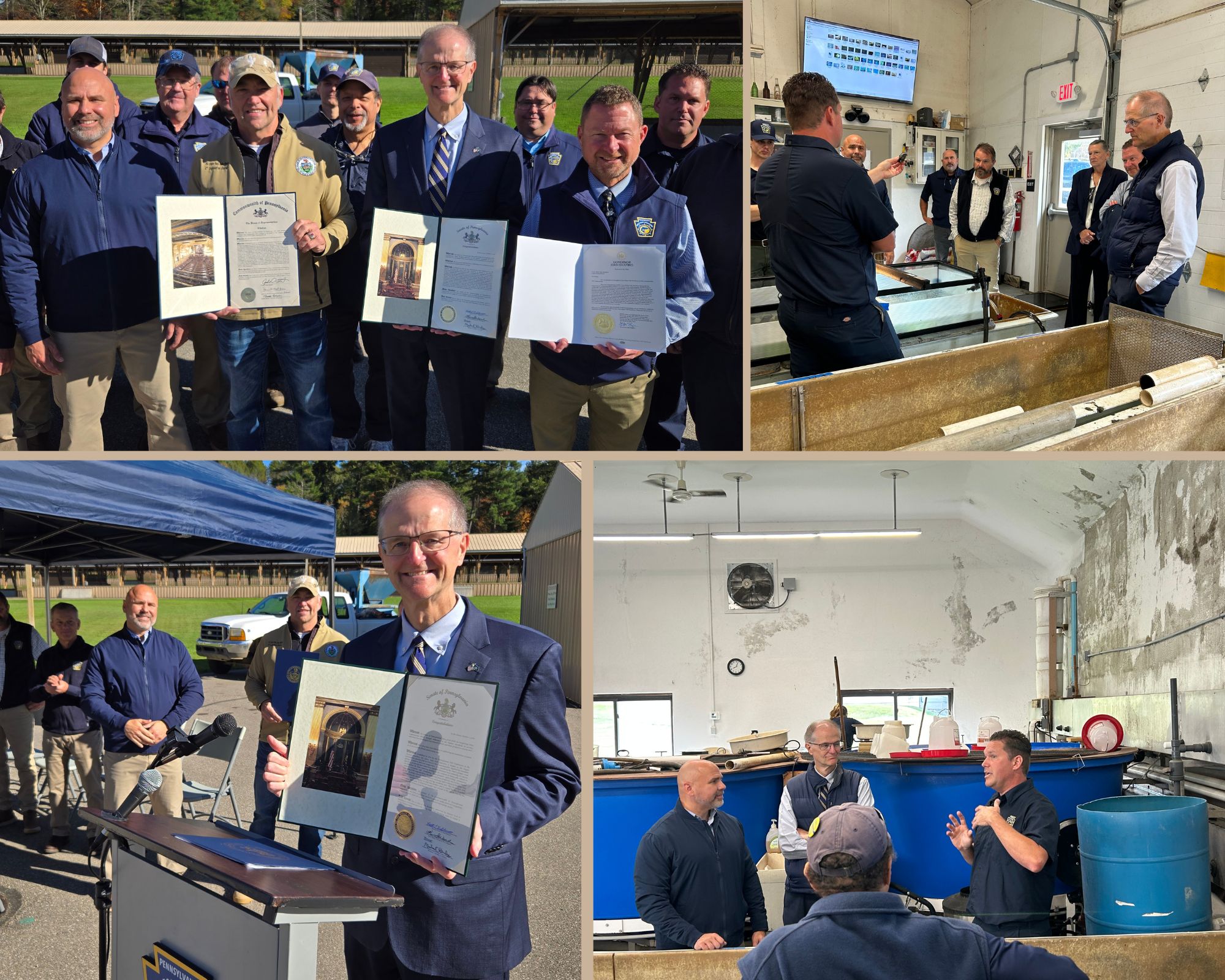
I was pleased to join the celebration of a very special milestone for the Corry State Fish Hatchery – 150 years of service to Pennsylvania anglers! Established in 1876 as the Western Hatchery, the Corry State Fish Hatchery is Pennsylvania’s longest continuously operating hatchery. Each year, it produces more than 300,000 trout and plays an important role in supporting our state’s fishing heritage and local economy. The hatchery continues to thrive thanks to its dedicated Fish & Boat Commission staff, who help keep this longstanding tradition alive while welcoming approximately 5,000 visitors each year. It’s great to see a facility with so much history continue to make such a positive impact on our region. I was proud to present a Senate citation, alongside Representative Jake Banta, who presented a House citation, recognizing this impressive anniversary and the many people who have contributed to the hatchery’s success over the years. Congratulations to everyone involved, and here’s to another 150 years! Senate Votes to Provide Lifetime No-Contact Orders for Victims
A measure to provide lifetime no-contact orders for victims of certain serious or violent offenses was approved by the Senate. Under current law, victims must go to court to renew no-contact protections each time they expire. Without renewal, an offender may once again attempt to contact the victim, even though the conviction, and the harm that made the protection necessary, has not changed. Unwanted contact can retraumatize victims, especially survivors of rape and other sexually violent offenses, including offenses involving the abuse or exploitation of children. Senate Bill 1484 allows a judge, upon the request of the victim or prosecutor, to issue a permanent order prohibiting the defendant from contacting the victim. The order could be terminated or modified at the victim’s request or if the underlying conviction is overturned, dismissed or otherwise legally invalidated. Read more about this bill, known as “Kayleigh’s Law.” Senate Bills to Help Local Nonprofits Raise Funds Set to Become Law
The Senate gave final approval of measures to help local nonprofits, including American Legion posts, VFWs and fire companies, by expanding fundraising opportunities, allowing organizations to retain more of the money they raise and providing additional ways to accept raffle ticket payments. Senate Bill 416 would allow eligible nonprofit organizations to accept electronic payments, including credit cards, debit cards and payments through platforms such as PayPal and Venmo, for raffle tickets. Current law limits these transactions to cash or checks, restricting organizations’ ability to accommodate supporters who increasingly rely on electronic payment methods. Organizations would still be required to verify raffle ticket purchasers are at least 18 years old. The bill does not authorize online gaming or live drawings. Read more about Senate Bill 416. Senate Bill 398 would allow fire companies with a Small Games of Chance license to conduct online raffles, with restrictions ensuring that participants are in Pennsylvania and at least 18 years old, through a pilot program ending Dec. 31, 2027. In addition, the bill would permit organizations to retain 50% of their small games of chance income, up from the current 40%. The remainder would continue to be donated to public interest purposes. The bill would also increase the prize limit for small games of chance conducted by a licensed eligible organization in any seven-day period from $35,000 to $60,000 — the first increase since 2013. Read more about Senate Bill 398. Bill to Protect Animals from Painful Experimentation Almost Law
Legislation to protect dogs and cats from painful, taxpayer-funded experiments has been approved by the General Assembly and is headed for enactment. The protections in Senate Bill 381, the Beagle Bill, would make Pennsylvania the 18th state to grant dogs and cats an opportunity to be adopted into a loving home after experiments are over, prohibit the sale of cosmetics that have been newly tested on animals, prevent the expenditure of commonwealth funds on painful experiments and more. Read more about protecting animals and increasing transparency through the Beagle Bill. Stronger Reporting Requirements for AI-Generated Child Sexual Abuse Material
The Senate voted to better protect young people against the serious threats posed by child sexual abuse materials generated using artificial intelligence (AI). The bill was approved by the House of Representatives and is headed for enactment into law. House Bill 2474 would require mandated reporters to report all instances of child sexual abuse material (CSAM) they become aware of, including those produced by a minor. This applies to teachers, childcare workers, healthcare providers and other individuals responsible for caring for children. The legislation, which was introduced in April, mirrors the language in Senate Bill 1050, a bill the Senate passed in November 2025. The legislation also adds hazing to Pennsylvania’s mandatory reporting guidelines. Hazing is not currently considered child abuse under Pennsylvania law when one child commits that crime against another. Read more about this legislation. House Democrats Refuse to Keep Men out of Women’s Sports
The Senate passed not one, but two bills to preserve opportunities for female athletes at public schools and colleges but the House of Representatives refused to vote on either. Senate Bill 1293 would require public schools and colleges to label sports teams as male, female or coed. The legislation states only biological females can join teams designated for women. The bill would also allow students to take legal action if they are harmed by violations of this rule. It’s similar to Senate Bill 9, which, like Senate Bill 1293, was passed by the Senate with bipartisan support. Since 2020 in Pennsylvania, men have stolen first place from female athletes 98 times and unjustly took second or third place 76 times. I’ll be working again to pass this commonsense measure in the next legislative session. How PA Makes Breast Cancer Detection and Care Accessible
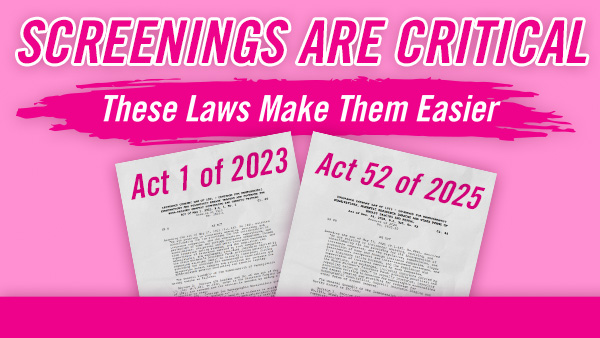
Pennsylvania has two significant laws to make early breast cancer detection and follow-up care more accessible. Act 1 of 2023 is a comprehensive breast cancer supplemental screening and genetic testing law now fully in effect for individuals with increased risk factors who are insured under Pennsylvania law. It provides coverage for the following at no cost:
Act 52 of 2025 is a diagnostic breast imaging law that includes no-cost diagnostic mammograms, breast MRIs and ultrasounds for individuals of average risk or higher with state-regulated insurance. The law will be fully implemented by January 2028. When in full effect, it will provide coverage for the following at no cost:
|
||||
|
||||


Want to change how you receive these emails? 2026 © Senate of Pennsylvania | https://www.senatorscotthutchinson.com | Privacy Policy |